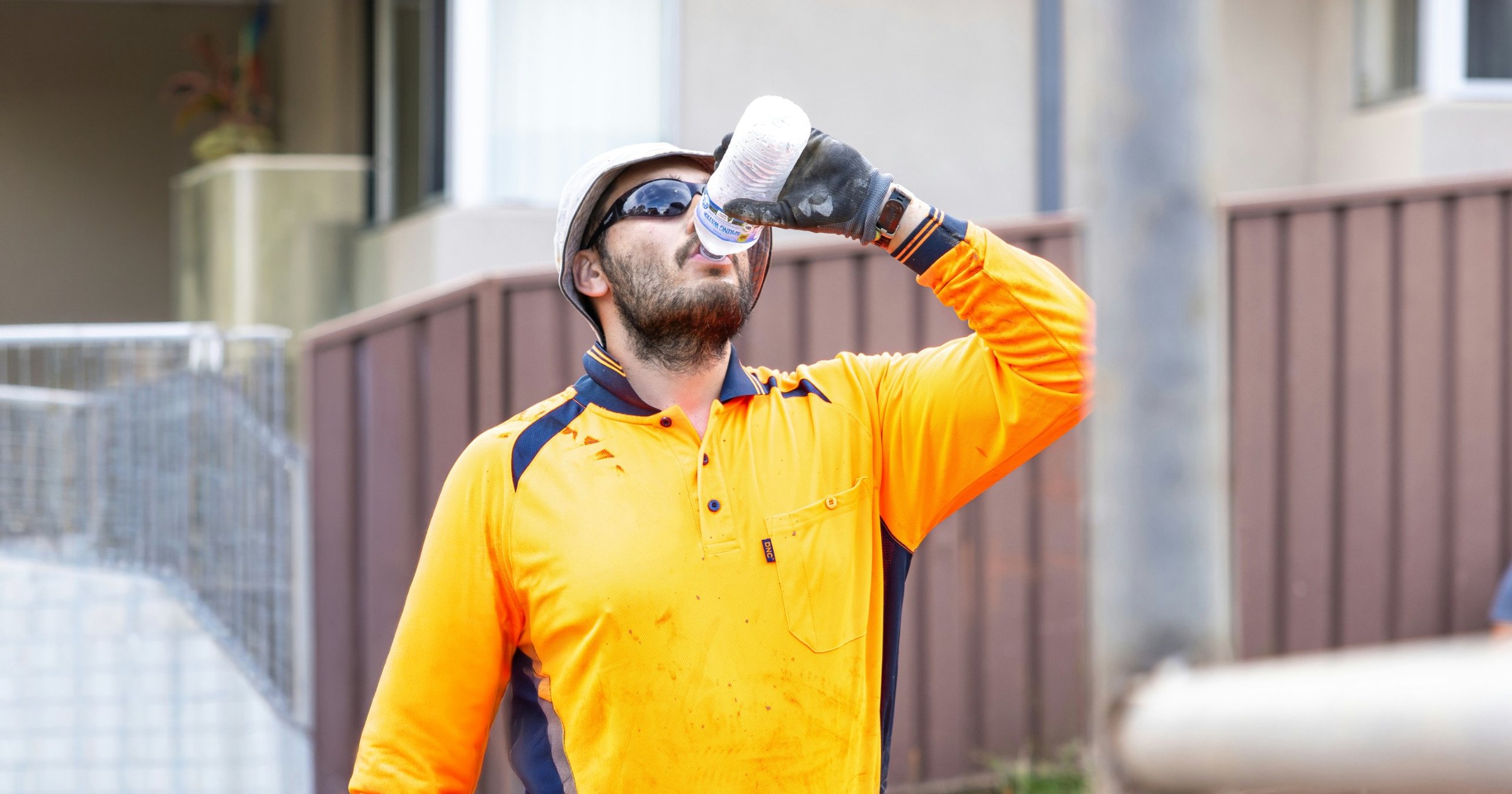
It's 2pm, the shed's like an oven, and someone says they've got a headache. That's the moment a heat toolbox talk is for. Here are the points worth saying out loud.
- Drink before you're thirsty. A small cup (200 ml) of cool, not cold, water every 15 to 20 minutes is the SafeWork NSW figure, with no energy or caffeinated drinks and no salt tablets. WorkSafe Victoria puts it at every 15 minutes, thirsty or not. Worth knowing: thirst is satisfied before fluid loss is replaced (Safe Work Australia).
- Take the break in the cool. Air conditioning if you can, shade at the very minimum, and any PPE you don't need taken off (SafeWork NSW). Break areas should be as close to the work site as possible (Safe Work Australia).
- Move the hard work. Hot tasks go in the cooler part of the day on WorkSafe Victoria's list. Safe Work Australia includes cancelling or rescheduling tasks until conditions are cooler among the ways a business can manage the risk.
- Watch each other. Dizziness, headache, weakness, cramps and nausea are the heat exhaustion signs, and red, hot, dry skin, confusion and fainting are the heat stroke signs (WorkSafe Victoria). For heat stroke, call 000 (Safe Work Australia). Looking out for each other's wellbeing is part of the training that Safe Work Australia lists for workers.
- Look after new starters and anyone back from leave. Workers who aren't acclimatised, or who are back after a week or more away, are at higher risk of heat-related illness, and acclimatisation isn't something to rely on as a control, because it's different for every person (Safe Work Australia). Worth a mention to anyone coming back after the Christmas break.
At what temperature do we stop?
There's no maximum temperature set under the Occupational Health and Safety Act 2004 or the Occupational Health and Safety Regulations 2017 for a worker to stop working, according to WorkSafe Victoria, and some workplaces have their own policy, so it's worth knowing yours. In NSW, a concern goes to your supervisor first, then your health and safety rep or their manager, then SafeWork NSW on 13 10 50.
Run it as a toolbox talk
Our free toolbox talk template is a starting point, and what should go in a toolbox talk covers the basics.
Where digital forms help
A toolbox talk form is completed on the phone and stored with the date and time. Add a QR code to the form and the crew can sign on themselves, so who was there is recorded without anyone typing out names.
We build forms software, not safety advice. The above is a plain-English summary of what the regulators publish, and the links go to them. For your own site and your own job, check with your state regulator or someone qualified.
Try it free for 14 days, no card required, and we'll set it up with you.