Want to build your own task-specific version? Try the free SWMS builder.
SWMS builder →Formwork often involves temporary load-bearing support and work at height, which can make it high risk construction work, so a Safe Work Method Statement is needed before it starts. Our free SWMS template is a base template you fill in for your own job. Below, it's filled in for suspended slab formwork, with the hazards to cover and the controls to think about. Download the blank template here:
Not sure whether your job needs a SWMS? Read what a SWMS is and when it's required.
Need to record an incident instead? Get the free incident report template.
Example only, not for use as your own SWMS. This is the base template filled in for a fictional job: erecting, pouring and stripping suspended slab formwork 3.6 metres above ground. Click a page to enlarge it.
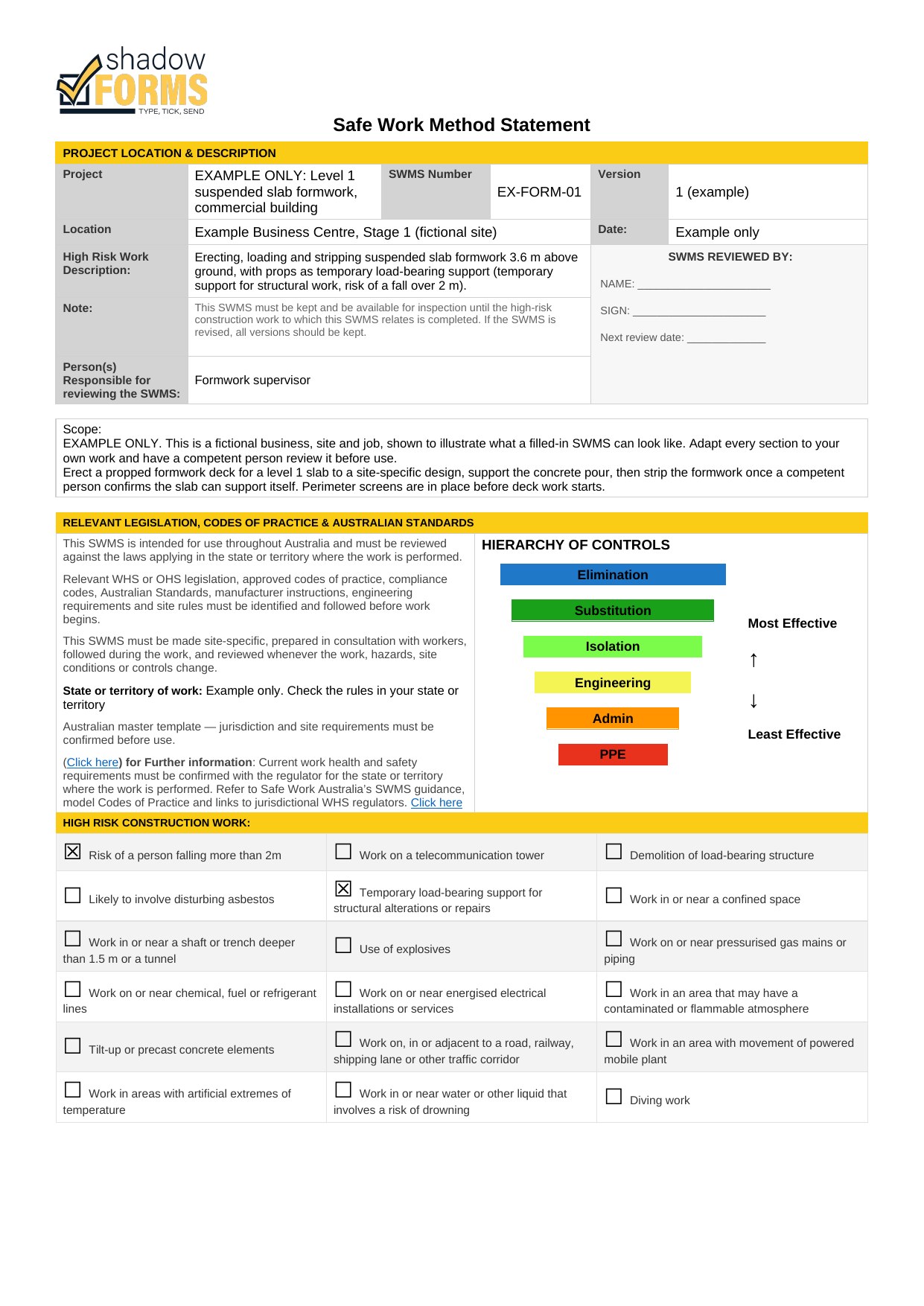
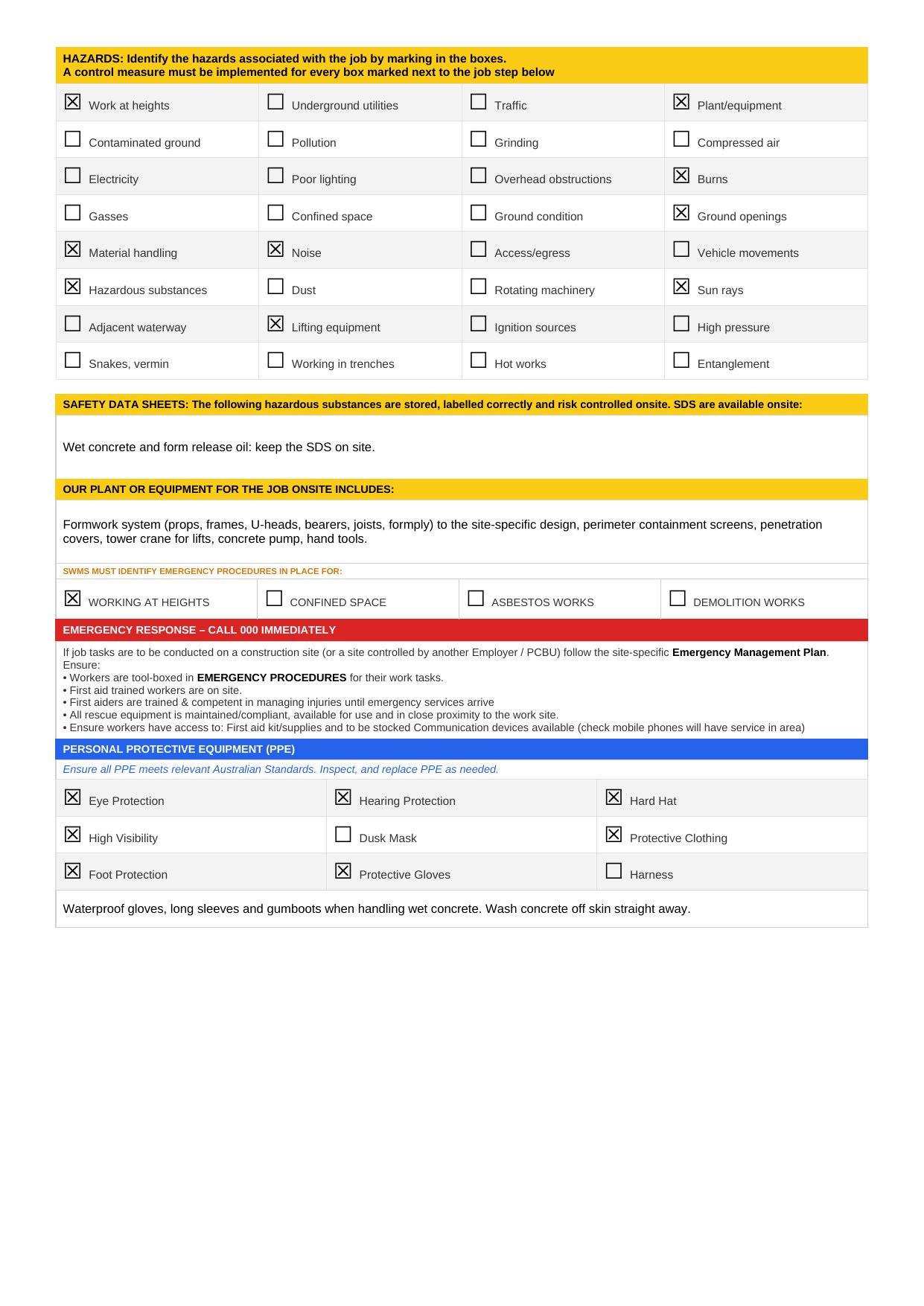
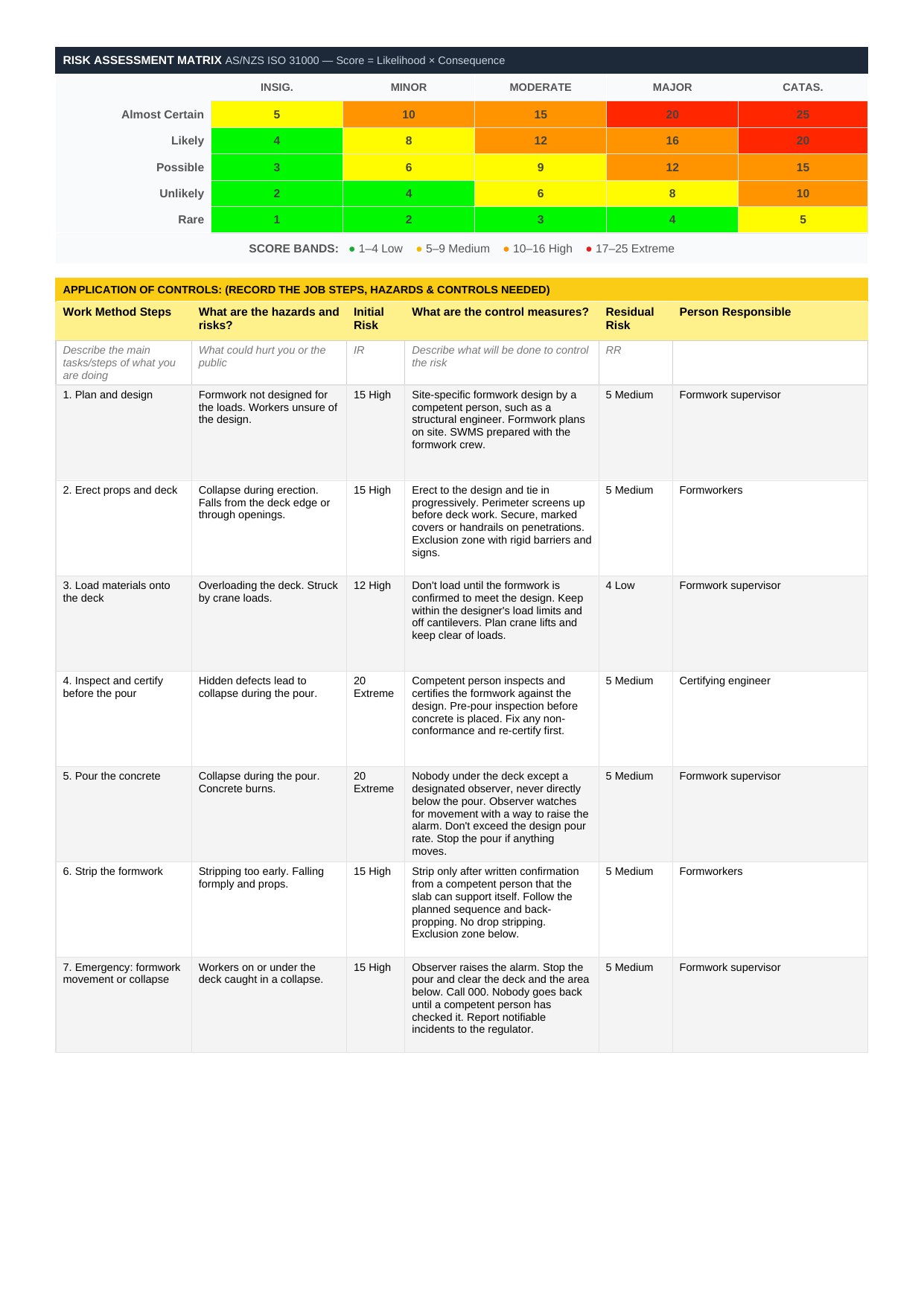
This example includes risk scores. They aren't legally required, and WorkSafe Victoria advises leaving risk matrices and scores out of a SWMS, so check what your regulator expects. Your own SWMS must be specific to your job and site, and prepared in consultation with the workers doing the work.
The Shadow Forms SWMS builder is a tool on our website that guides you step by step through creating a SWMS for your job, including formwork. It's a draft only, so have a competent person review it before use. Enter your email address and you can download it as a PDF.
The PDF is a copy only. To complete it digitally, upload it and we can add it to the app, Shadow Forms branded. If you have your own uniquely branded SWMS, or want this example adjusted to your business, we can do that too. Upload a form, or get in touch.
Need a JSA instead? Try the free JSA template.
Just need a quick check before you start? Get the free Take 5 template.
Safe Work Australia says formwork and falsework work may be high risk construction work, such as where there's temporary load-bearing support or a risk of a fall over 2 metres. If so, a SWMS must be prepared before it starts.
Safe Work Australia's guide to formwork says a certifying engineer should inspect and certify it before it's loaded, with a pre-pour inspection before concrete is placed. SafeWork NSW also says a separate certification should happen no more than 48 hours before the pour. Check what your regulator expects.
Only as a starting point. It must match the actual formwork design, site and tasks, and be prepared in consultation with workers. WorkSafe Victoria, for example, says a generic or AI-generated SWMS should be reviewed on site and anything not relevant removed.
Safe Work Australia's guide says to get written confirmation from a competent person, such as a structural engineer, that the structure can support itself, based on the design, verified concrete strength and time since the pour.
Yes. Upload it on our Upload a form page and we can add it to the app, along with your pre-pour checklists. A SWMS from the builder would be Shadow Forms branded. If you have your own branded SWMS, get in touch.
General information only, not legal advice. Check your state or territory regulator.
Use our SWMS builder, or send us your own SWMS and we'll show you exactly how it would work in the app, no obligation.
Questions? Email us at info@neonroom.com.au